ZINEBI Express sets a challenge: to conceive, shoot and edit a short film in just 72 hours, with Bilbao as the setting. Even though it is open to participants not from the world of academia, it mainly gathers together teams of students from film schools and faculties in a creative experience involving ZINEBI, EHU and the SGAE Foundation, along with other partners.
The timeline requires the participants to make quick decisions and choices, to work in teams and to find solutions with the available resources. From the first idea to the final editing, each choice has immediate consequences: they have to listen, distribute tasks, handle the unexpected and complete a film. That pressure is also a way of learning the trade.
The city can be part of this exercise. Its streets, its spaces and its everyday presence are potentially subject matter for film making, and each team can find there a story and a way of telling it. Films thus provide different perspectives not only of a theme, but also of a shared setting.
The short films produced will be shown at the festival and compete for its awards. The challenge for the participants peaks in that encounter with the audience: to see how the decisions made over the three days come alive on screen and when meeting the audience.

Aranzazu Calleja
Aranzazu Calleja (Bilbao, 1977) composes audiovisual music; she studied Fine Arts, violin and musical composition in Barcelona and at Berklee College of Music. In 2014, she took part in Berlinale Talents and is a member of the Spanish Film Academy and of the European Film Academy.
Aranzazu has composed film soundtracks, including El hoyo, Cinco lobitos, Irati, Marco and Akelarre, for which she was awarded the Goya for the Best Original Music in 2021, together with Maite Arroitajauregi (Mursego). Her recent works include Los aitas and Maspalomas, for which she received Goya, Feroz and Platino nominations. Her most recent work is Salitre, the debut by Norma Vila, and selected for the Official Section of the 2026 Sitges Film Festival.
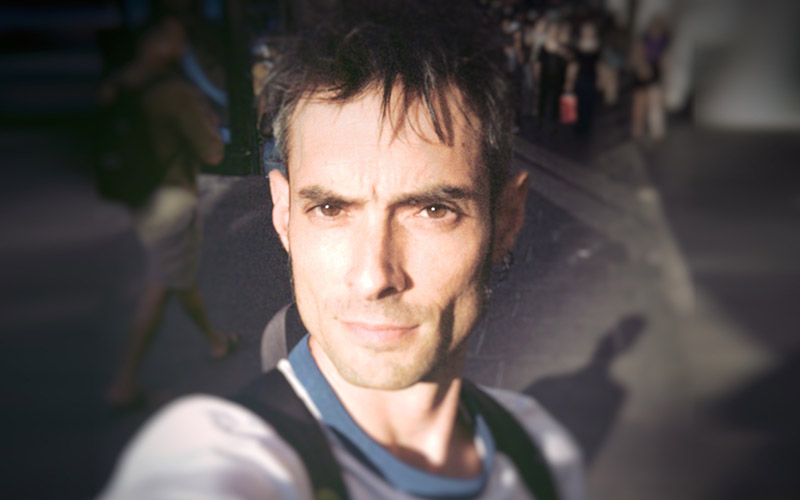
Adrián García de los Ojos
Adrián García de los Ojos (Bilbao, 1986) is a musician, composer, actor and music director from Bilbao. He started with the txistu (Basque fipple flute) and piano when he was seven and graduated in Performing Arts from BAI in 2012. As a composer, Adrián has worked in film, television and theatre, with soundtracks and soundscapes for projects such as La higuera de los bastardos, Mi pequeño samurái and La carrera contra Duchenne. In theatre, he has composed music for plays of the ilk of ¡Ay, Carmela!, Luces de Bohemia, La casa de Bernarda Alba, Simplicissimus Kabaret and Mr. Bo, as well as regularly appearing as a musician and actor on stage. He has also built a career as a performer, taking part in audiovisual and drama productions, as well as in the series Goenkale. His most recent work includes being a vocal coach for the 3 seasons of the talent show Ztanda broadcast on EiTB1 and ETB ON.
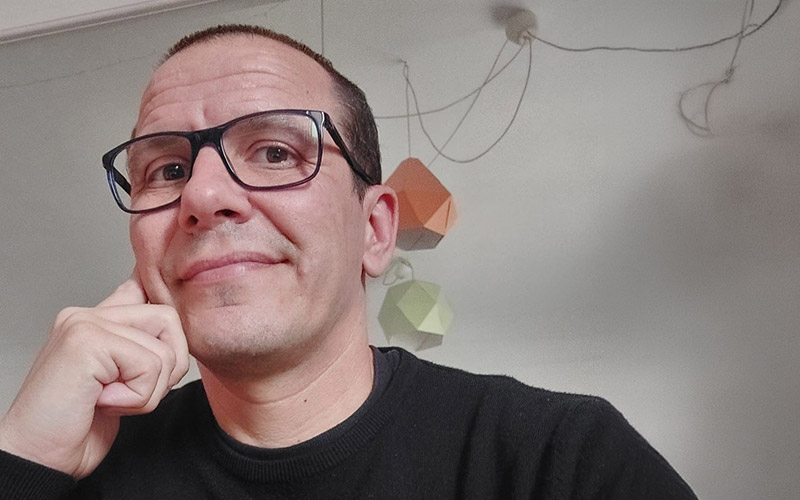
Juan Dopico Massobrio
Juan Dopico Massobrio (Bilbao, 1981) is an audiovisual producer, journalist and cultural manager. He graduated in Journalism from the University of the Basque Country (EHU) and has a Master’s Degree in Digital Arts from the Universitat Pompeu Fabra. He is one of the founders of Caostica, the association behind the Bilbao International Short Film and Music Video Festival, and Tracking Bilbao.
Juan has built his career in the audiovisual industry as a director, photographer, screenwriter and producer, involved in projects such as El ataúd de cristal and El hoyo, where he also worked as a community manager and stunt double. In 2024, he published Dentro del hoyo, his first book, on the film phenomenon of El hoyo and the people involved in its creation. He has also taken part in projects linked to Bilbao’s culture and audiovisual scene, including the documentary Bilborock, mucho más que rock.