Once again, ZINEBI reaffirms its commitment to the country’s creative fabric, giving visibility both to established filmmakers and to new voices shaping the present and future of Basque audiovisual creation. The section arguably represents the most complete and diverse showcase dedicated to Basque short film production: an essential space for recognising local creative talent.
Bertoko Begiradak brings together 33 short films screened at the Arriaga Theatre over four sessions. Among them are the five Basque productions selected for competition in ZINEBI’s International Short Film Competition, along with 28 recent works which together offer a broad and representative panorama of local filmmaking.
Renowned voices and emerging perspectives alike confirm the vitality and diversity of the short format as a space for expression and narrative exploration.
The short films included in Bertoko Begiradak compete for several specific awards, designed to stimulate local production and strengthen its connection with audiences:
Bertoko Begiradak also embraces feature-length documentary, giving visibility to contemporary Basque cinema in longer formats. This year’s programme includes five feature-length films produced in Euskal Herria.
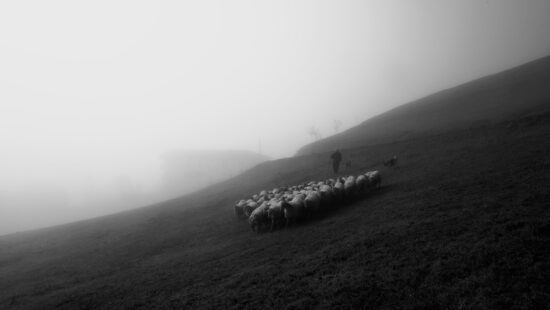
In 1955, fascinated by the ancient tradition of hunting pigeons with paddles and nets, Orson Welles directed the documentary The Land of Basques.
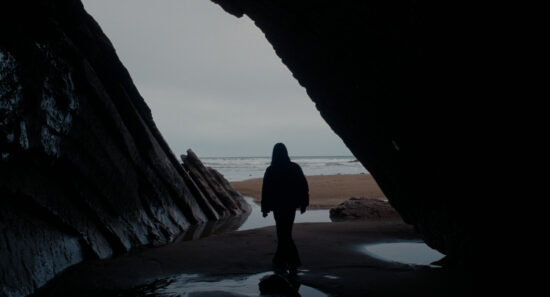
During the wrap party for a film shoot in Zumaia, Miren tries to find her place within the crew.
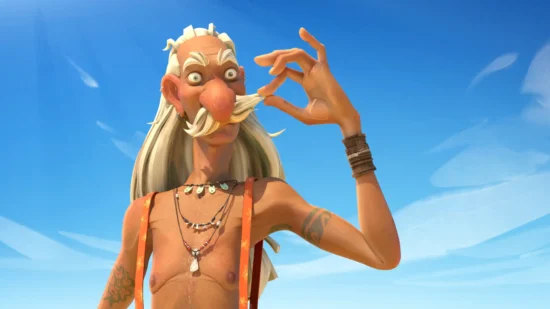
In the middle of nowhere, Rufi, an elderly woman who lives with a taxidermied dog and spends her days gambling online, has made indifference to the outside world her way of life. But her routine is disrupted by Bob, a hippie neighbour who has turned his motorhome into a private jungle. Amidst invasive plants, strange incense and fruit thrown with dubious intent, Rufi’s insular world begins to transform in a way that is as fascinating as it is unsettling.
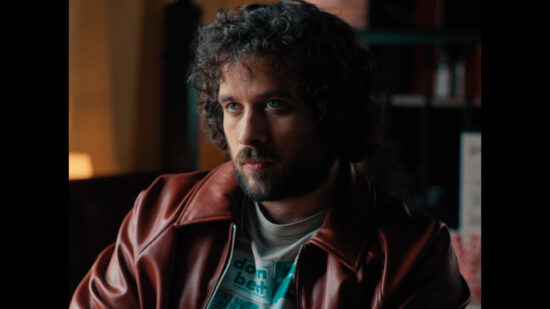
Julen (30) and Aitor (27) will meet in a café in New York for a conversation they have long been waiting to have. As time goes by, unresolved matters from the past resurface.
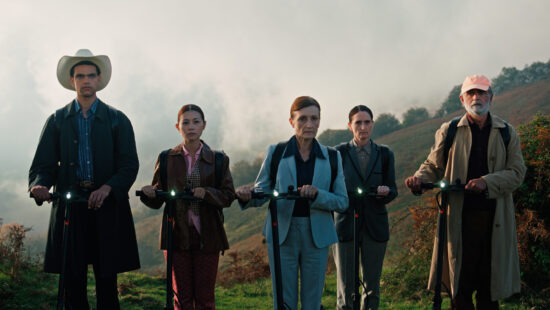
In the future, emotions and gestures have disappeared. But we are in the present: five researchers arrive on electric scooters in a village in the Basque Country, searching for what their time has forgotten. Through interviews and observation, they enter the intimacy of its inhabitants, until the boundaries between the different times begin to blur.
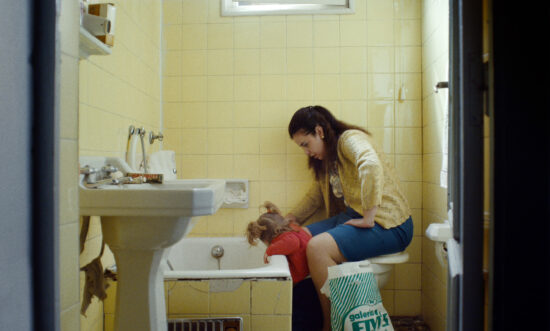
Charo secretly collects abandoned objects and gives them a place in her home. When her family leaves her to look after her niece, her routine unravels and she must decide whether to keep playing the role imposed on her or choose her own path.
Light pollution increases alongside the advance of capitalism. The world is lit up in the name of security and development. However, darkness is a safe haven for those forced to flee their homes. This is a job [lan], in the night [gau], gaulana: a film about the people who, throughout the history, have sought shelter in the darkness. They were the prisoners who escaped from Ezkaba, who tried to use the stars to navigate their way to France; also, the Portuguese in the middle of the last century; today, the migrants who try to cross the Bidasoa.
When a baby cries, they should be fed. A good mother wouldn’t let them die of hunger. A good father wouldn’t wish to murder him.
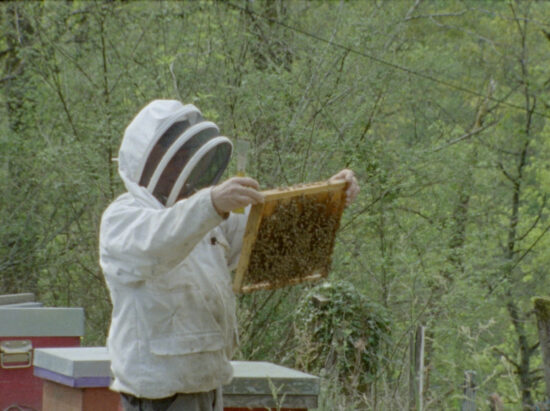
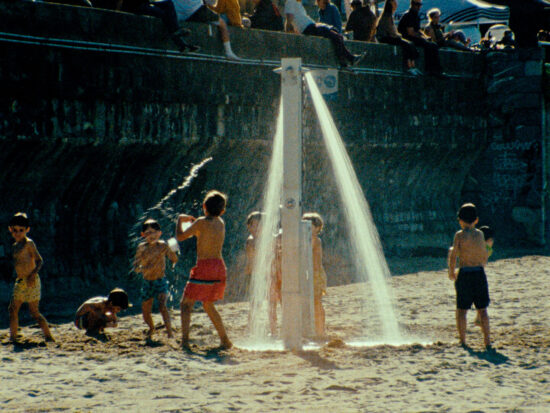
Through a series of encounters between a researcher, a beekeeper, and a group of children, the film explores the intertwined relationships between bees, beeswax, and mourning in the Basque Country.
On the coast of the French Basque Country, Euskara is not always passed down from one generation to the next. Where words fade away, Basque identity finds other ways to endure: in gestures, in the relationship with the sea, in moments shared around the table. It’s a fragile but tenacious transmission. One lived without words.
Bilbao, August 1983. Torrential rain causes the estuary to burst its banks and plunges the city into chaos, but the High club keeps its doors open. Although power failures and instability outside intermittently disrupt its activities, some men continue to meet, sustained by this temporary refuge and haven of desire. Little by little, the boundary between inside and outside becomes blurred: water begins to seep in, puddles form and the constant sound of rain invades the club, revealing a reality that can no longer be kept at bay.
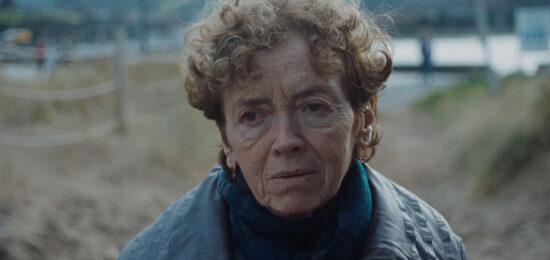
Karmen (83), unable to pay her electricity bill, collects wood washed ashore to heat her house, reviving a family tradition. Her friend Maixabel (77) sees her and copies the idea. When Karmen runs out of firewood, she returns to the beach only to find it empty, leaving her once again helpless against the cold. To help her, her granddaughter Oihane (16) secretly leaves bags of firewood at her front door. Meanwhile, Karmen tries to discover who is behind this kind gesture.
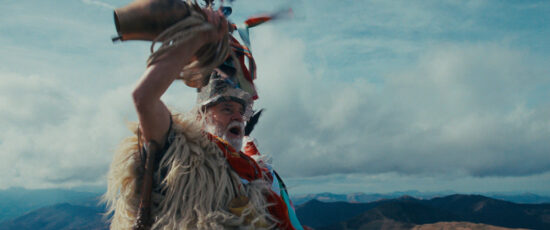
In a valley where cowbells ring out loudly in winter, Aiara dreams of becoming a “joaldun”. As carnival approaches and the other children get ready, her family tells her that before she can wear the cowbells, there are many things she must first understand.
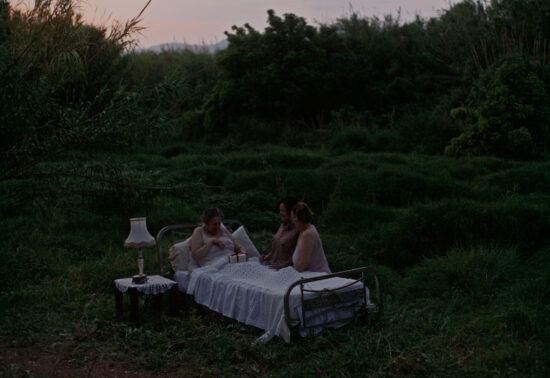
The Madam is a reconstruction of what remains of my great-grandmother, Madame Consuelo, one of the most prominent brothel madams in Valencia during the Franco regime. Together with my aunts and my mother – three former revue stars – I set out to connect with her through a psychomagical, performative and ritualistic journey.
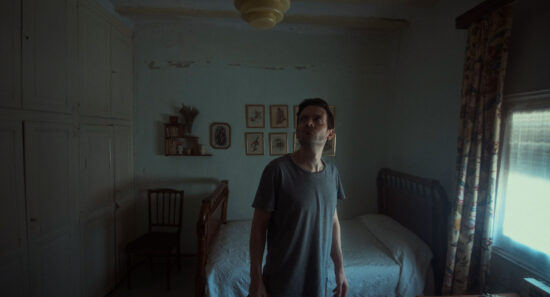
Sometimes, the hardest step in a day is the first one. In «Loose Sleep», our hero fights a battle against himself: is it worth it to leave the comfort of the duvet and live life outside?
In the late 1980s, a socialist revolution abolished work, and since then the State has covered all the population’s needs. In return, citizens may be called upon to present a public service television programme.
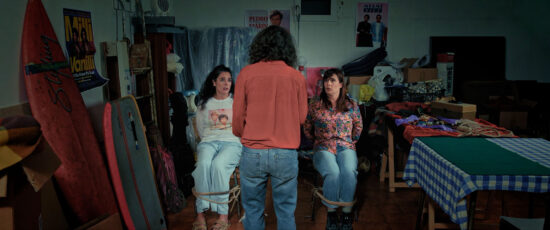
Two female friends wake up in a basement. They are tied to a chair. Another friend of theirs appears and has a question to ask them… and expects an answer.
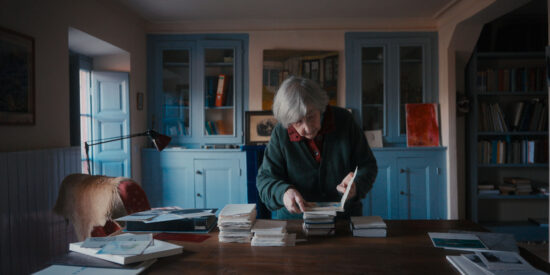
Considered as the best engraver of our time, Mari Puri immerses us in a world between reality and fantasy in this documentary. Drawing on the accounts of artists and personalities from the art world who have closely followed her work, the documentary traces the evolution of a fundamental artist of Basque culture. She is an artist renowned for her engraving, drawing and painting; the hallmarks of her work are her total mastery of colour, abstraction bordering on the figurative, and the figure as an essential element.
People, objects, and places have changed the way they relate—or at least, that’s how Oihana perceives it. Now the emptiness takes up space. A path, a window, a bed, a wardrobe, a mirror. With these, and what fits into a hiking backpack, she has all she needs to reset her coordinates and rest.
Two friends who share a house with two apartments and a well in their garden begin to trade with it. One bottles it, and the other waters a vegetable garden whose produce she sells. They build a machine around the well to exploit it increasingly better. The machine works faster and faster.
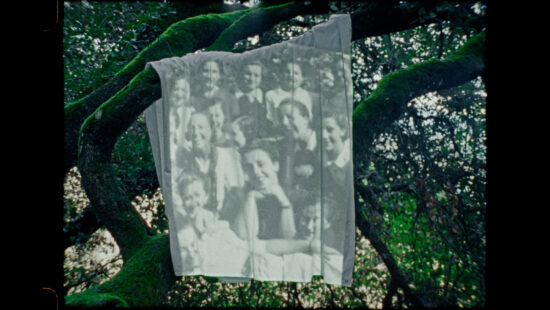
Between 1934 and 1945, as Spain went through Republic, Civil War, and Franco’s dictatorship, hundreds of women walked the distance from Pamplona to Fort San Cristóbal (at the top of Mount Ezkaba, in the Spanish region of Navarra), bringing food, clean clothes, comfort and hope to the political prisoners incarcerated there. We retrace the path to the fort: as we look at what they once saw, their voices linger in the air. The place becomes a meeting point. Are we stepping on the same earth they walked? Who were they?
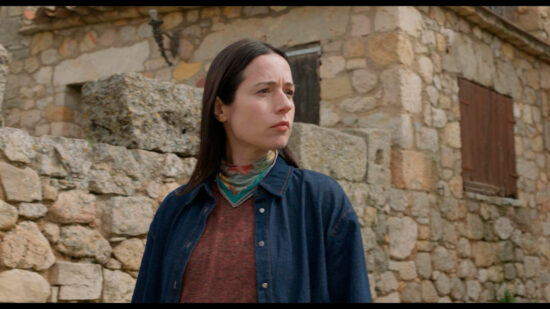
Lidia and Asier, a couple, arrive in the village of Siurana, surrounded by cliffs, to visit a friend. There is tension between them. Lidia becomes increasingly fascinated by what she feels as she wanders through its streets. A local legend tells the story of an Arab woman’s escape. Asier tries to reach out to Lidia, but she remains distant. When they reach the village church, Lidia stays outside. That will be the last time Asier sees Lidia.
A black swan is a highly improbable event. This is a film about the films I dreamed about, but couldn't make.