The Bertoko Begiradak’s wide selection of feature-length documentaries includes films that share a place of origin, but not a formula.
Several focus on memory, intimacy and history, and dwell on the point where they intertwine; others are a journey through the very fabric of Basque culture and show how fertile and varied it is; others bring prominent figures of our society to the present to interpret them through a modern lens and not just to leave them in an archive; and one is at the crossroads where documentaries and fiction – the territory of non-fiction – meet to delve further into the intimacy and fragility of memories.
Viewing this section’s screenings one after another lets you appreciate something that watching them separately would not: to find resonances between them while maintaining their autonomy as individual works; and to value, with a significant sample, the documentary films produced in the Basque Country today.
Joseba LopezortegaThe documentary analyses the work and influence of Gabriel Aresti, along with his poetry, his relationship with musicians, and his pioneering role in the creation and adoption of Standard Basque. In the 1960s and 1970s, new musicians emerged in the Basque Country and who were around 20 and 30 years old at that time (Laboa, Lertxundi, Lete, Lourdes Iriondo, Oskorri, Urko); some set to music and sang Aresti’s poems, which made him a leading figure in Basque culture.
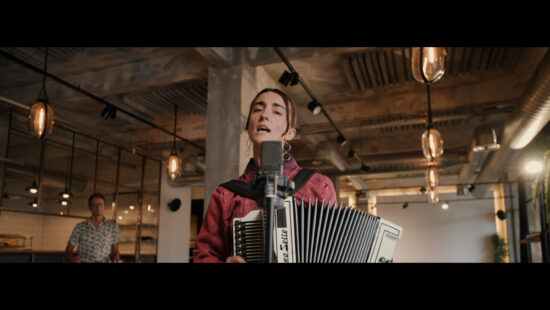
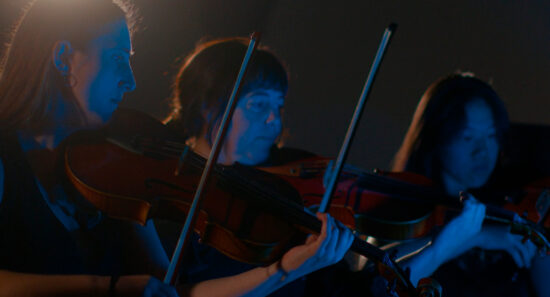
Known for his 10 Basque Melodies, Guridi is the most important Basque composer. His inexhaustible body of work consistently achieves results of the highest quality, and through his sensitivity, he helps shape part of our musical history. Guridi stands out for his humanity and subtle irony, as well as his professional rigor, combined with an artistic quest that aims to leave a legacy of beauty. Through 9 of his compositions, we explore the composer and his era:Is it the entertainment industry or art? Is musical language a craft or an artistic expression?
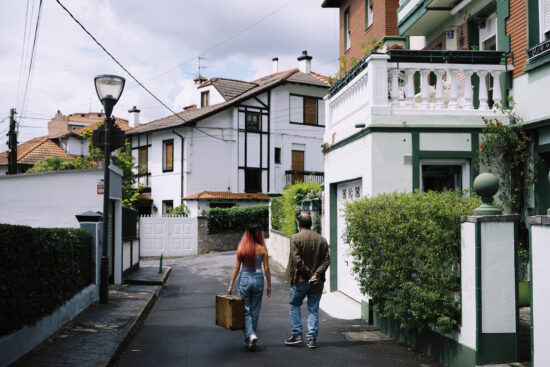
Ten years after Álex Angulo’s death, Dodó, the daughter he adopted in China, returns from Taiwan to discover who her father was. With his secret suitcase, she travels through Bilbao and Madrid, reconnecting with relatives, friends and colleagues from film, theatre and television. Their stories and excerpts from his work piece together Álex’s life as an actor and a father, while Dodó renews their bond and explores her own identity.
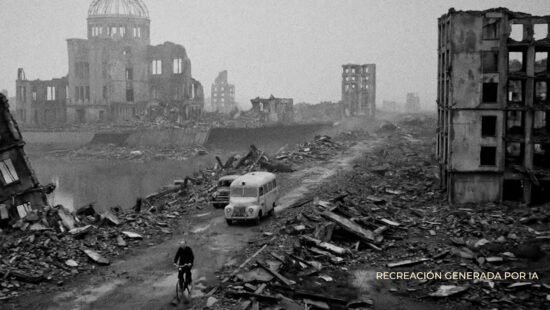
Eighty years on from the atomic bombing of Hiroshima, a university lecturer tells the story of Pedro Arrupe, a Basque Jesuit priest who survived the explosion and helped to save over 150 people. The documentary traces his origins in the Basque Country, Rome and Japan, and gathers survivors’ testimonies. Their accounts keep a vital memory alive and prompt a reflection on the nuclear threat, peace and human rights when defending them is more needed than ever.
Considered as the best engraver of our time, Mari Puri immerses us in a world between reality and fantasy in this documentary. Drawing on the accounts of artists and personalities from the art world who have closely followed her work, the documentary traces the evolution of a fundamental artist of Basque culture. She is an artist renowned for her engraving, drawing and painting; the hallmarks of her work are her total mastery of colour, abstraction bordering on the figurative, and the figure as an essential element.
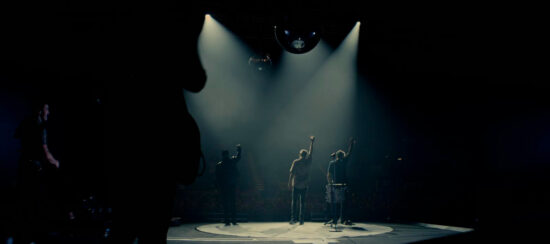
After a 25-year career, Gatibu are bidding farewell to the stage. The documentary follows the band members on this final tour, during which they reflect on the passing of time, maturity and the importance of knowing how to say goodbye.
A film director returns to his childhood home to recreate, with actors, the argument that led to his parents’ separation when he was four. Through improvisation and a shoot that exposes its own artifice, he constructs memories he never had access to. But as the scene is repeated, his directions grow unstable and the line between reconstruction and desire begins to blur.
Light pollution increases alongside the advance of capitalism. The world is lit up in the name of security and development. However, darkness is a safe haven for those forced to flee their homes. This is a job [lan], in the night [gau], gaulana: a film about the people who, throughout the history, have sought shelter in the darkness. They were the prisoners who escaped from Ezkaba, who tried to use the stars to navigate their way to France; also, the Portuguese in the middle of the last century; today, the migrants who try to cross the Bidasoa.
Iñigo Etxezarreta and his band, En Tol Sarmiento, have reached the top after 20 years on the road and stage. But, in front of 35,000 people, Iñigo breaks down. The pressure and the unhealed wound left by his brother’s death in childhood bring his deepest guilt back to the surface.